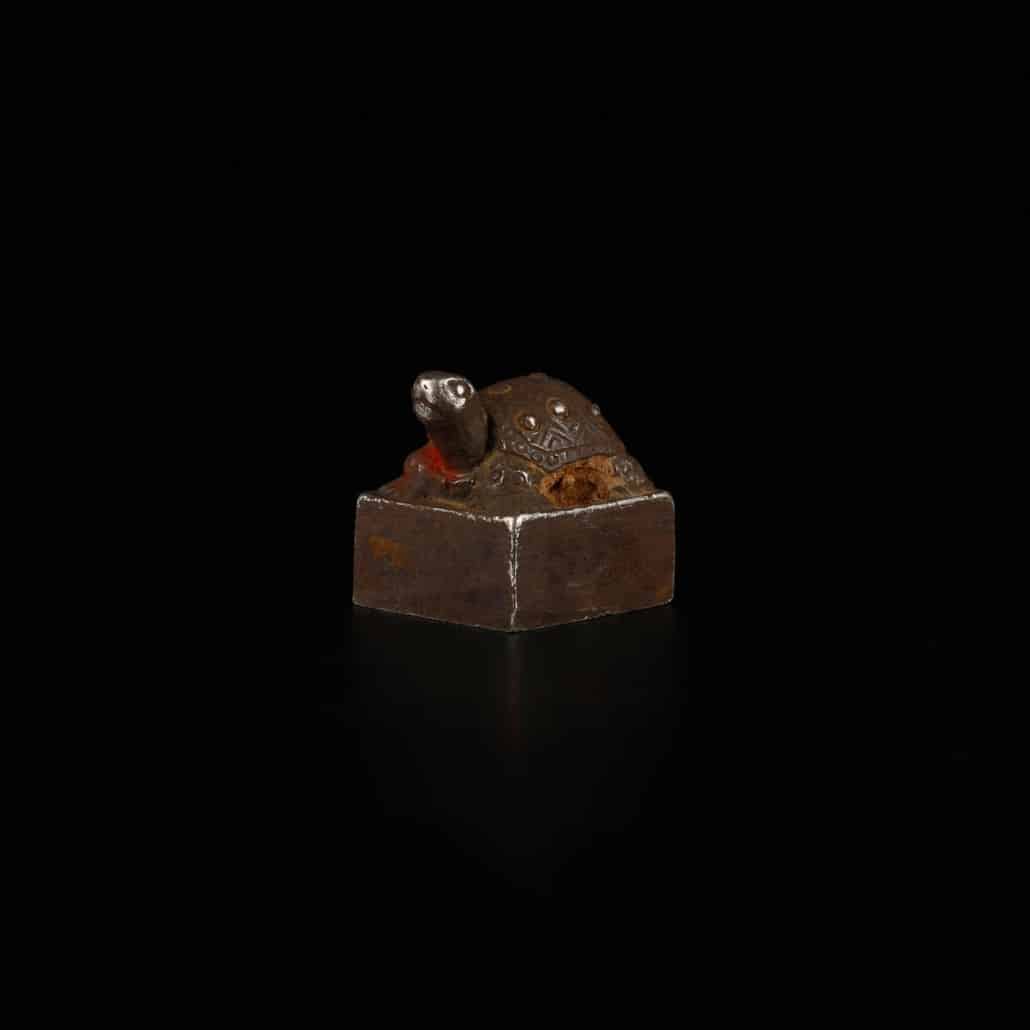
A SMALL SILVER SEAL WITH TORTOISE KNOB
An extraordinary silver seal with tortoise knob originates from Han Dynasty China. This rare piece of ancient Chinese art showcases the supreme craftsmanship and administrative traditions of imperial bureaucracy. Furthermore, Han Dynasty master silversmiths cast solid metal seals with symbolic animal knobs to denote official rank and social status. Today, these ancient official artifacts remain highly prized by collectors of museum-quality historic antiquities.
Design of the Silver Seal with Tortoise Knob
First, the silver seal with tortoise knob features a solid square base surmounted by a sculpted tortoise figure (guiniu). The tortoise raises its head alertly with an extended neck, while its rounded carapace features engraved geometric pattern work. In addition, a horizontal aperture pierces through the center of the tortoise body, enabling a silk ribbon or cord to loop through for suspension from an official’s belt.
Most importantly, the defining characteristic of this piece relies on its imperial Han ranking symbolism. According to official Han Dynasty sumptuary laws, specific metal alloys and finial motifs directly denoted distinct ranks within the imperial administration. As a result, the combination of cast silver with a tortoise knob was reserved for high-ranking military commanders, nobles, and official magistrates. Consequently, solid cast silver seals with tortoise finials remain defining hallmarks of early Chinese bureaucracy.
| Place of origin | China |
| Date | Han Dynasty (202 BC – 220 AD) |
| Availability | US$ |
| Reference number | SO-000153 |